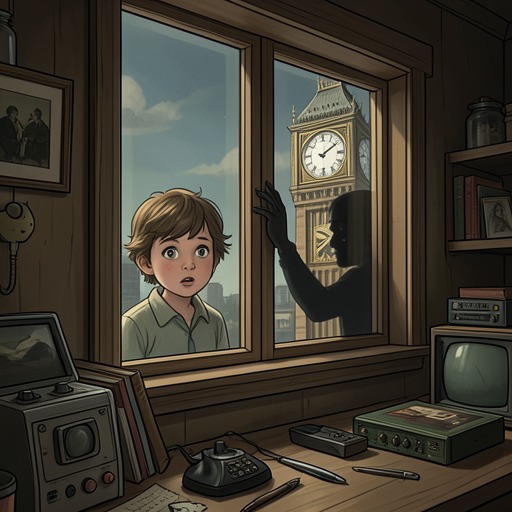
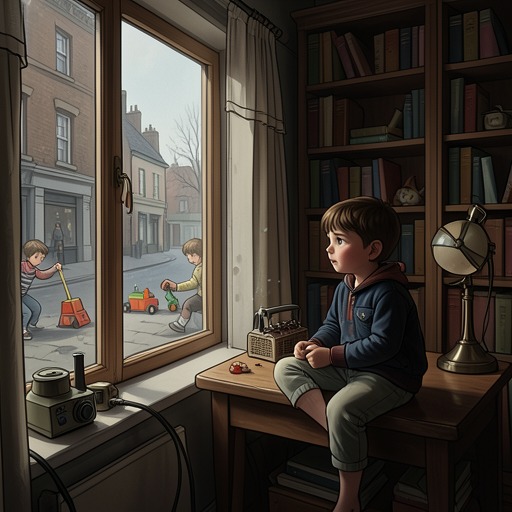
Miss Peregrine’s house destroyed by bombing
Miss Peregrine's Home of Peculiar ChildrenMiss Peregrine’s house destroyed by bombing is the turning point that makes the children’s departure concrete: the home they knew has been damaged beyond repair, and the life Jacob is leaving behind can no longer be recovered. The ruined building brings together the destruction of their shelter and the change in Jacob’s sense of what home means.
Destruction of the House
After the children flee along the path, they reach the lawn amid smoke, and the younger children begin to cry. The bomb has not landed in its usual place on Adam’s finger; instead, it has split him and exploded. The back corner of the house is left in ruins, two rooms are charred, and a crater marks the spot where Adam had stood. The scene sharply contrasts the home’s familiar routine with the damage the children now face.
For Jacob, the destruction also makes the abandoned building he encountered earlier newly legible. He can picture the house becoming the sad, desecrated wreck he first discovered weeks before: the present damage points directly toward that future ruin. The place is no longer merely threatened; it has begun to resemble the memory that drew him into this story.
A Grave and a Sign of Continuity
Once the crater is filled, Fiona covers its raw soil with shrubs and vines and begins to grow them. By the time the group finishes packing, Adam has returned to his old place, but that spot now marks Victor’s grave. The sequence holds destruction and renewal together: the landscape is tended, yet the house and its losses cannot simply be restored to what they were.
Departure and the Meaning of Home
At dawn, the children load their boats for the journey. Jacob recognizes that he had mistaken his former life for something ordinary: he had wanted to escape it, but had not understood how extraordinary it was. He also discovers that home is something he can miss. His thoughts turn to his parents, his town, and his once-best-and-only friend, whose memory feels tangible and heavy as he prepares to leave.
The house’s damage gives this departure its decisive image. Jacob understands that returning to his old life is as impossible as returning to the bombed home. The closing image of cages whose doors have been blown away frames the break not as a simple release from burdens, but as an irreversible threshold: the children must leave, and Jacob must carry what he has lost with him.